Financial services
Sensitive customer and transaction data makes equipment records and outsourced handling important.
Is your data ready when devices change hands or leave your organization? Explore six use cases, industry concerns and product options with Frontier.
Before equipment changes hands, consider the data in scope, verification of results and records linked to the device—not simply whether files have been deleted. These six scenarios provide a starting point for assessment.
Protect sensitive data before equipment leaves your organization.
Retired computers may retain customer lists, contracts and account information. Formatting or reinstalling an operating system alone does not establish that the original data has been securely removed.
Evaluate Drive Eraser for supported drives and devices, with erasure results that can be matched to equipment for handover and review.
Prepare devices before handing them to the next user.
Shared or reassigned computers may retain the previous user’s documents and personal information. Inconsistent handling can also leave devices overlooked.
Confirm retention and handover needs before evaluating whole-device erasure and subsequent reimaging. Frontier can help assess the product combination and redeployment requirements.
Assess data handling before equipment is sent to an external provider.
Data may leave your control along with a drive. Failed media may not be accessible for software-based erasure.
Assess options against device condition and repair requirements. If erasure or verification cannot be completed, evaluate retaining the media or appropriate destruction in line with organizational policy.
Connect device diagnostics, erasure and result tracking.
Mixed models, operating systems and device conditions can make consistent manual testing and recordkeeping difficult at scale.
Evaluate Mobile Diagnostics and Erasure, taking supported devices, account locks and connectivity requirements into account.
Assess solutions for drives, LUNs or virtual machines.
Server retirement, tenant departures and storage reallocation require a clearly defined scope to avoid affecting other services.
Consider Drive Eraser for physical drives, LUN Eraser for selected LUNs, or Virtual Machine Eraser for supported virtual environments. Snapshots and backups require separate scope assessment.
Assess targeted removal while equipment remains in use.
Project data can be distributed across local storage, shared storage, synchronization services and backups. Removing one file does not address every copy.
Evaluate File Eraser for selected files and folders, subject to storage-media and system limitations. Synchronized copies, snapshots and backups must be managed separately.
Sensitive customer and transaction data makes equipment records and outsourced handling important.
Official and sensitive information requires handling appropriate to classification policies; some environments need offline options.
Shared computers, donations and completed projects raise concerns for student privacy and research information.
Designs, processes and source code need protection. Industrial systems and media sent for repair require individual assessment.
Sensitive records and images, specialized equipment and operational continuity require careful assessment.
High volumes of mixed equipment require consistent management, customer records and reuse planning.
Clarify device models, volumes, data sensitivity and operating conditions.
Assess compatibility, usage and reporting needs on representative equipment.
Support product familiarization and technical coordination, including centralized management needs.
Blancco Management PortalConsulting and technical services
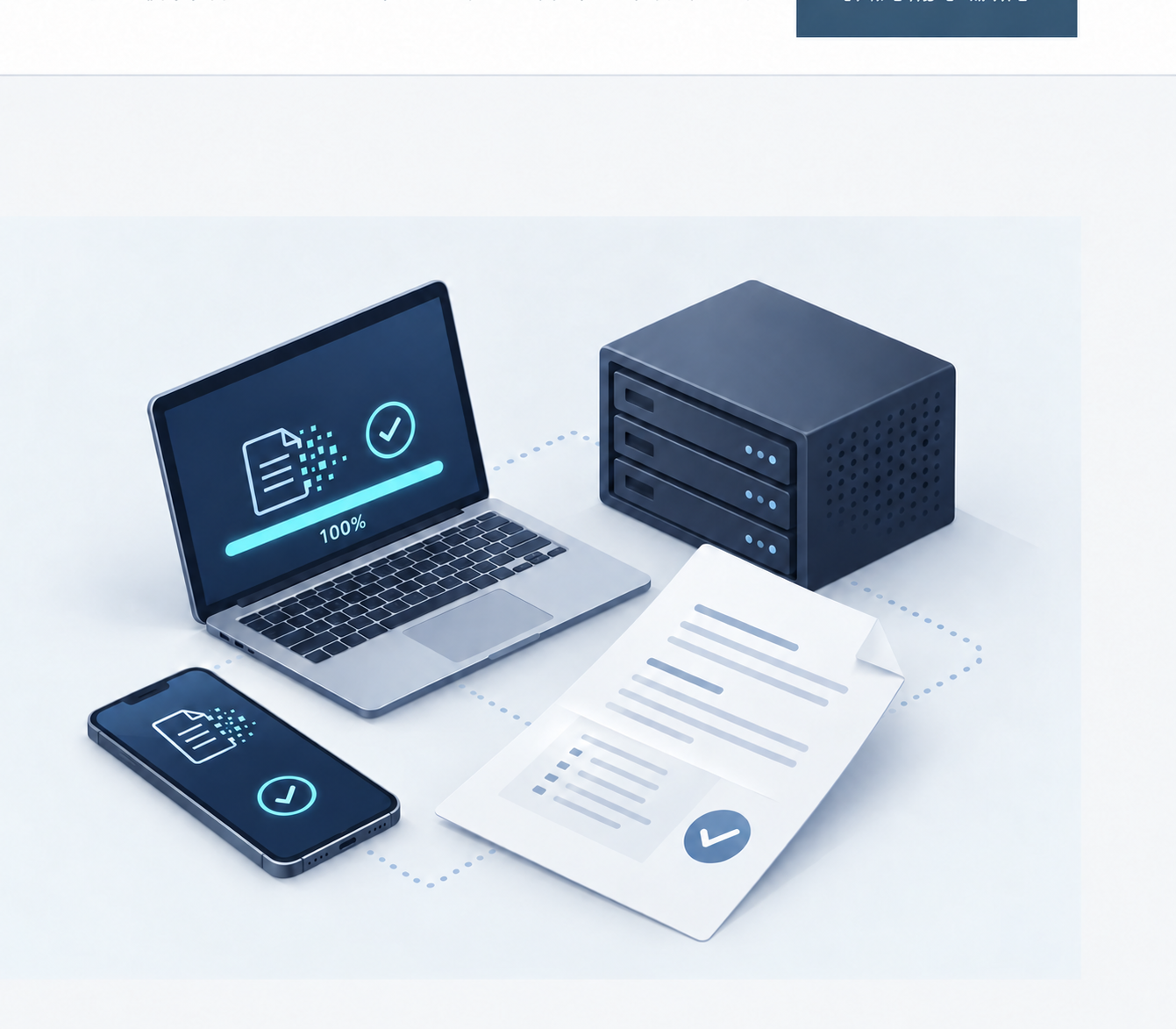
Service scope is confirmed individually. Review retention, backup and authorization requirements before erasure. Suitability depends on device condition, product version and environment; the illustrated 100% progress does not imply universal erasure capability.